

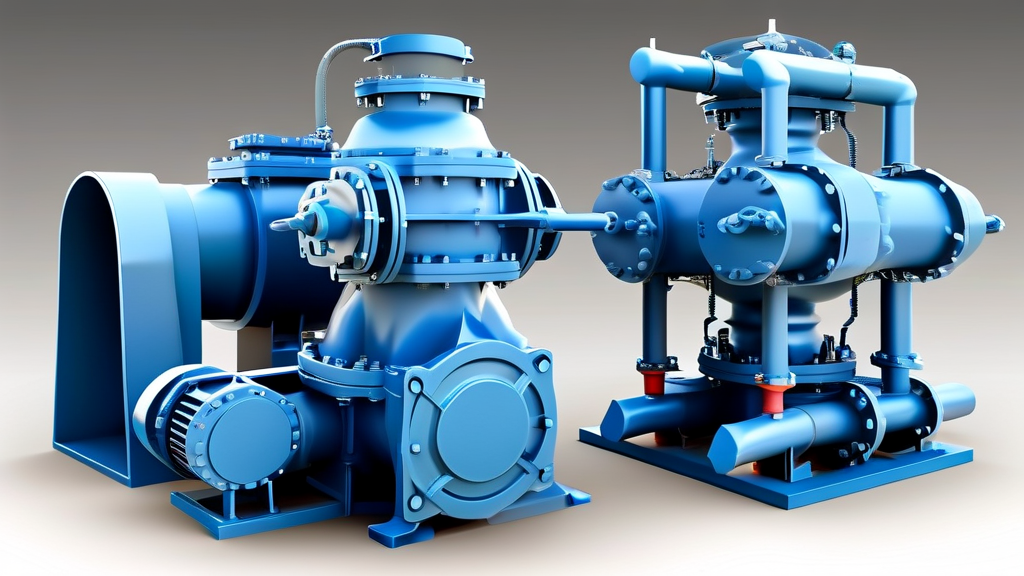
Temperature and Pump Material Selection
The choice of slurry pump material is heavily influenced by the temperature of the slurry it will handle. Different materials have varying tolerances to heat, and selecting the wrong material for a given temperature can lead to rapid wear, failure, or even catastrophic events .
Effects of Temperature on Common Slurry Pump Materials
Different materials used in slurry pumps react to temperature in distinct ways, affecting their durability and performance.
High-Chrome Alloys
High-chrome white iron is a popular choice for impellers and liners in mining and dredging due to its excellent abrasion resistance . These alloys can typically withstand temperatures up to 200-300°C, depending on their specific composition . However, their performance can be compromised under certain thermal conditions:
- Erosion-Corrosion: In acidic or reducing environments, the metallic matrix of high-chrome alloys can corrode, undercutting the hard carbide particles that provide wear resistance. This accelerates material loss .
- Thermal Stress: Prolonged exposure to high temperatures can lead to thermal expansion and stress, potentially causing cracks or structural failure, especially if the pump is not designed to dissipate heat effectively .
Elastomers (Rubber, Polyurethane)
Elastomers like natural rubber, neoprene, and polyurethane are used for liners and impellers where their flexibility and erosion resistance are beneficial .
- Thermal Limits: These materials have lower heat resistance compared to metals. Natural rubber begins to degrade at temperatures above 65-70°C, while most polyurethanes are unsuitable for temperatures exceeding 70°C . Exceeding these limits can cause the material to soften, hydrolyze, or lose its structural integrity, leading to rapid failure .
- Chemical Sensitivity: Elastomers are also sensitive to the chemical composition of the slurry. For example, natural rubber can swell when exposed to oils or solvents, while polyurethane can be damaged by strong acids and bases .
Ceramics
Ceramic materials, particularly silicon carbide, are known for their exceptional hardness, wear resistance, and corrosion resistance . They are often used as coatings on metal impellers or in parts exposed to highly abrasive and chemically aggressive slurries.
- Heat Resistance: Ceramics have excellent heat resistance, with silicon carbide able to withstand temperatures well above 120°C without deforming . This makes them suitable for applications involving hot slurries.
- Brittleness: The primary drawback of ceramics is their brittleness. They are susceptible to cracking under thermal shock or mechanical impact, which can lead to catastrophic failure if not properly managed .
Metals (Stainless Steel, Cast Iron)
Other metal materials, such as stainless steel and cast iron, are used in pump casings and housings . Their performance is also affected by temperature:
- Thermal Expansion: Metals expand when heated. If a pump is subjected to a rapid temperature change, different parts may expand at different rates, leading to stress and potential cracking. This is a key concern in thermal shock events .
- Corrosion: The rate of chemical corrosion can increase with temperature. For example, a hot boiling liquid can be more corrosive to metal surfaces than the same liquid at a cooler temperature .
Thermal Shock and Its Consequences
Thermal shock is a critical failure mode for slurry pumps. It occurs when a rapid temperature change causes different parts of the pump to expand or contract at different rates, creating internal stress that can exceed the material’s strength . This can lead to catastrophic failure.
- Common Causes of Thermal Shock: Thermal shock can happen when a cold liquid is introduced into a hot pump or when a hot liquid is introduced into a cold pump. This is a common issue following a total recirculation event or when a pump is restarted after dry running .
- Risks: The consequences of thermal shock can be severe, including shattered impellers, cracked casings, and the risk of high-velocity metallic fragments being projected, which can cause serious injury or death to nearby personnel .
How Temperature Influences Pump Performance
Beyond material degradation, temperature directly impacts the pump’s operational efficiency and safety.
- Overheating: Excessive heat can cause thermal expansion, leading to misalignment, increased wear, and potential damage to critical components like bearings and seals . Overheating can also cause the water or coolant to boil, creating steam that puts stress on the pump’s insulation and leads to cracks or failures .
- Cavitation: Temperature fluctuations can contribute to cavitation, a phenomenon where vapor bubbles form and collapse within the pump. This can cause pitting and damage to impellers and other internal components .
- Fluid Viscosity: The viscosity of the slurry can change with temperature. For example, a viscous fluid like honey becomes runnier when heated, which can alter the pumping dynamics and the stress on the pump components .
Material Selection Based on Temperature
Selecting the right material for a slurry pump requires a thorough understanding of the operating temperature. The table below provides a summary of typical material choices based on different slurry conditions, including temperature ranges.
| Slurry Conditions | Typical Choice | Temperature Limitations | Notes |
|---|---|---|---|
| Fine silica tailings, neutral pH | Polyurethane (PU) or Natural Rubber (NR) | PU: <60°C, NR: <60°C | PU offers 3-5x longer life than NR in fine, neutral slurries |
| Cyclone feed with coarse, sharp ore | High Chrome A05/A33 | <80°C | High-chrome alloys are excellent for coarse, angular solids but are vulnerable to low pH erosion-corrosion |
| Acid leach slurry, fine particles | EPDM or lined Natural Rubber | <70°C | Metals risk erosion-corrosion; EPDM provides better chemical resistance than natural rubber |
| Oily tailings, moderate fines | Neoprene or Nitrile | Neoprene: <90°C, Nitrile: <90°C | Avoid natural rubber due to swelling from oils; neoprene and nitrile offer better chemical resistance |
| Hot process water with fines | EPDM or Stainless Steel | 90-120°C | EPDM is suitable for elastomer linings; stainless steel can handle higher temperatures and mixed chemistries |
| Highly abrasive, corrosive fines | Ceramic inserts or WC-coated metal | <80°C | Ceramics and tungsten carbide coatings provide extreme hardness and chemical inertness but are brittle and require careful handling |
Key Considerations for Material Selection
When choosing materials for a slurry pump, it is essential to consider the following factors in conjunction with temperature:
- Slurry Properties: The particle size, shape, and chemical composition of the slurry determine the type of wear (impact, gouging, sliding abrasion) and the required material hardness and toughness .
- Operating Conditions: The pump’s flow rate, pressure, and speed influence the mechanical stresses on the components and must be compatible with the material’s properties .
- Cost and Maintenance: The initial cost of the material is important, but the total cost of ownership—including maintenance, replacement frequency, and downtime—should be evaluated to make a cost-effective decision .
Please login to write a comment after